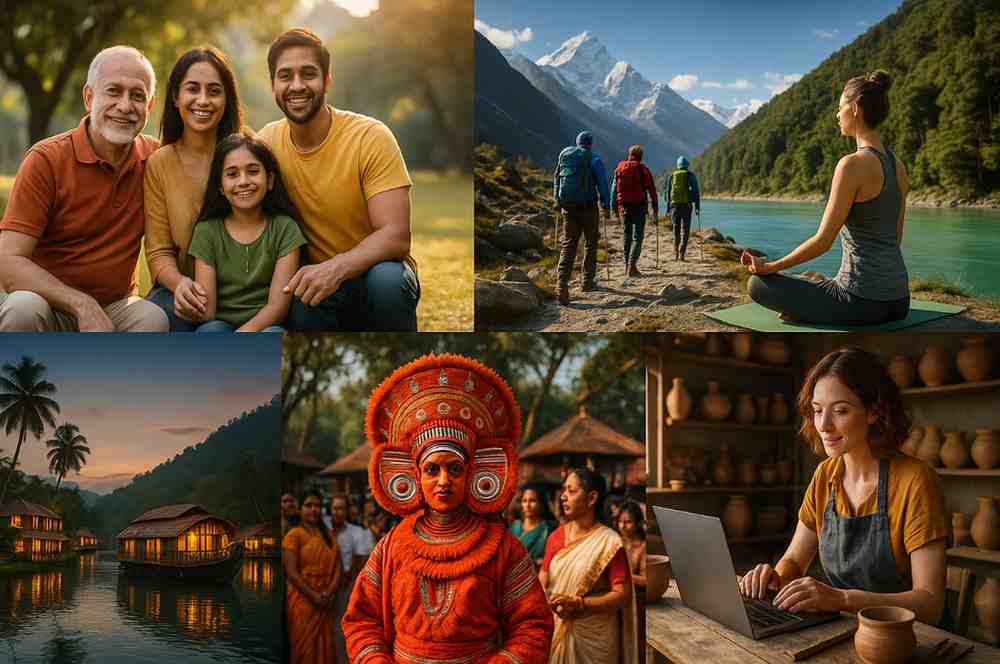
India’s tourism landscape is evolving rapidly, influenced by changing traveler preferences, technological advancements, and socio-cultural shifts. From urban explorers to adventure seekers, domestic travelers to international tourists, the country is witnessing new patterns that are redefining how people experience travel. Here’s a deep dive into the key travel trends in India that are shaping the industry today and in the years to come.
1. Experiential & Immersive Travel
- Cultural Experiences: Participating in local festivals, culinary workshops, and traditional crafts
- Adventure & Eco-Tourism: Trekking in the Himalayas, wildlife safaris in national parks, or exploring offbeat rural landscapes
- Wellness Journeys: Yoga retreats, Ayurveda treatments, and mindfulness-focused trips
Impact: Travel businesses are curating personalized, experience-driven packages to cater to this demand.
2. Multi-Generational & Family Travel
- Families are seeking destinations and activities suitable for all ages, from grandparents to children
- Resorts and accommodations are offering multi-room suites and family-friendly amenities
- Experiences that combine relaxation, adventure, and cultural exposure are highly favored
Impact: Travel agencies and hotels are designing packages that balance fun, comfort, and accessibility for all age groups.
3. Domestic Travel Boom
- Cities and towns across India are witnessing increased domestic tourism, from Himachal Pradesh and Rajasthan to the Northeast and coastal regions
- Weekend getaways, road trips, and micro-vacations are trending, supported by improved infrastructure and digital booking platforms
Impact: Smaller towns and lesser-known destinations are experiencing a revival, creating opportunities for local economies.
4. Sustainable & Responsible Tourism
- Eco-Resorts and Homestays: Accommodations using renewable energy, waste management systems, and sustainable practices
- Community-Based Tourism: Engaging with local communities while respecting traditions and culture
- Wildlife and Nature Conservation: Trips focusing on wildlife sanctuaries and preservation projects
Impact: Sustainability has become a key differentiator for hotels, tour operators, and travel brands.
5. Technology-Driven Travel
- Digital Booking Platforms: Seamless hotel, transport, and activity bookings via apps and websites
- Virtual Reality & AR Experiences: Pre-trip virtual tours and immersive cultural experiences
- AI & Personalization: Travel recommendations and itineraries tailored to individual preferences
- Cashless & Contactless Payments: Enhancing convenience and safety
Impact: Travelers enjoy more convenience, transparency, and personalized experiences than ever before.
6. Offbeat & Hidden Gems
- Northeast India, remote Himalayan valleys, and lesser-known coastal towns are attracting attention
- These destinations offer unique experiences, from trekking and cultural immersion to local cuisine exploration
Impact: Tourism boards are promoting hidden gems, and infrastructure is gradually developing to accommodate responsible tourism.
7. Wellness and Health-Focused Travel
- Yoga and meditation retreats in Rishikesh and Kerala
- Ayurveda therapies and spa treatments as part of travel packages
- Mindfulness and digital detox trips are emerging as popular choices
Impact: India is positioning itself as a global wellness tourism hub, attracting both domestic and international travelers.
Conclusion
The travel industry in India is evolving toward experience, personalization, sustainability, and inclusivity. Travelers seek authentic adventures, wellness journeys, and culturally immersive experiences while embracing technology and responsible tourism. Multi-generational family travel, domestic exploration, and offbeat destinations are becoming key pillars of this transformation.
India’s tourism landscape is no longer about visiting landmarks—it’s about creating memorable, meaningful, and sustainable experiences that resonate across generations and cultures.