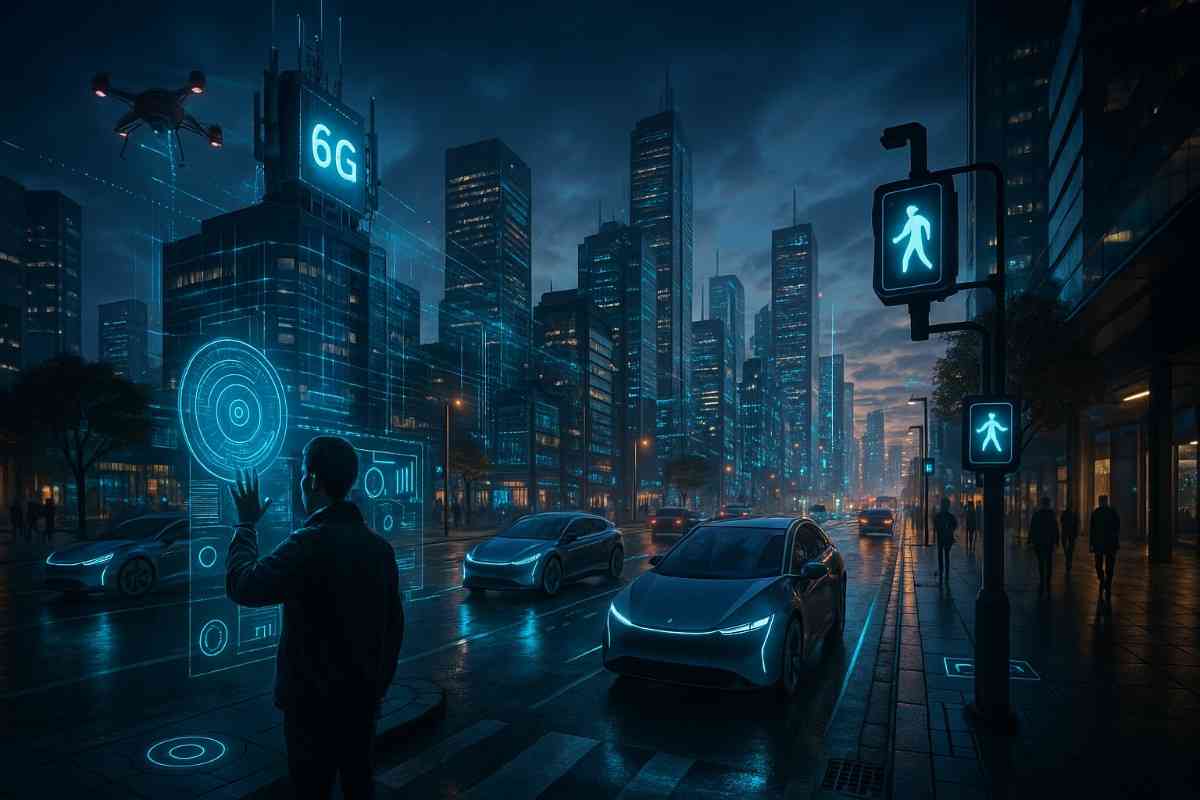
The landscape of connectivity is evolving at an unprecedented pace. As the world becomes increasingly digitized, our reliance on faster, smarter, and more adaptive communication networks grows. Enter next-generation connectivity, a paradigm shift that promises to seamlessly integrate sensing technologies, the forthcoming 6G wireless networks, and the massive expansion of the Internet of Things (IoT). In this article, we’ll explore how these innovations are shaping the future and what they mean for industries, cities, and everyday life.
Integrated Sensing: The Eyes and Ears of Modern Networks
Integrated sensing refers to the embedding of advanced sensor systems directly into communication networks. Unlike traditional networks that merely transmit data, these intelligent systems actively sense their environment, collect real-time information, and make predictive decisions.
Imagine a city where traffic signals can detect vehicle density, pedestrians, and even weather conditions, adjusting traffic flow dynamically to reduce congestion. In industrial environments, machines equipped with sensing-enabled connectivity can anticipate maintenance needs, avoiding costly downtimes.
Integrated sensing leverages technologies such as millimeter-wave radar, LiDAR, and advanced radio-frequency (RF) sensing, combined with machine learning algorithms to create a network that is not just communicative but perceptive.
6G: The Dawn of Ultra-Intelligent Networks
While 5G has revolutionized mobile communication, 6G is expected to redefine connectivity itself. Set to emerge in the 2030s, 6G networks will provide speeds exceeding 1 Tbps, latency under 1 millisecond, and near-zero energy consumption per transmitted bit.
But 6G is more than just speed. It will enable ubiquitous intelligence, meaning that devices won’t just communicate—they’ll collaborate. Networks will harness AI-driven resource allocation, integrated sensing data, and holographic-type communications to create immersive digital experiences that seamlessly blend with reality.
Key Features of 6G
- Tactile Internet: Enabling real-time haptic feedback for remote surgeries, industrial robotics, and virtual reality
- Integrated Terahertz Communication: Offering ultra-high-bandwidth connections to support massive IoT ecosystems
- Network Autonomy: AI-driven networks that self-optimize, self-heal, and intelligently distribute traffic loads
IoT Expansion: Connecting Everything, Everywhere
The Internet of Things is no longer just about smart homes or wearable devices. IoT is evolving into a massive, distributed network of intelligent endpoints—from autonomous vehicles and smart factories to healthcare monitoring systems and environmental sensors.
Next-gen connectivity will allow billions of devices to communicate simultaneously, sharing contextual insights rather than just raw data. This means that IoT ecosystems can become self-coordinating and predictive, enabling smarter cities, safer transportation, and more efficient energy systems.
Transformative Applications
- Smart Agriculture: Sensors monitor soil moisture, crop health, and climate conditions to optimize irrigation and yield
- Healthcare Monitoring: Wearable devices continuously track vital signs, alerting medical staff instantly to any anomalies
- Industrial Automation: Autonomous machines coordinate via high-speed networks, reducing human intervention and improving precision
Synergy: How 6G, Integrated Sensing, and IoT Intersect
The convergence of integrated sensing, 6G, and IoT is not just incremental—it’s exponentially transformative. By combining ultra-fast networks, real-time environmental sensing, and billions of intelligent devices, next-gen connectivity can create a self-aware digital ecosystem.
For instance:
- A smart city with 6G-enabled IoT devices can use sensing data to optimize energy consumption in real-time
- Autonomous vehicles can communicate with each other and with city infrastructure, avoiding accidents and traffic jams
- Industrial plants can dynamically adapt production lines based on supply chain fluctuations and environmental conditions, all coordinated by AI-driven 6G networks
This ecosystem will enable a world where digital and physical realities coexist seamlessly, unlocking possibilities from advanced healthcare solutions to fully automated smart cities.
Challenges Ahead
- Security and Privacy: With billions of connected devices, safeguarding sensitive data becomes paramount
- Infrastructure Requirements: 6G and massive IoT networks demand advanced infrastructure, from terahertz antennas to edge computing nodes
- Standardization: Global interoperability will require universal standards and protocols, a process that historically takes years
Addressing these challenges is essential for realizing the full potential of integrated sensing, 6G, and IoT ecosystems.
Conclusion
Next-generation connectivity promises a hyper-connected, intelligent, and responsive world. Integrated sensing will make networks perceptive, 6G will make them blazing fast and intelligent, and IoT expansion will ensure that everything from our cities to our wearable devices is interconnected. Together, they form the foundation of a future where digital and physical realities are no longer separate—they are seamlessly intertwined, creating opportunities that were once only imaginable in science fiction.