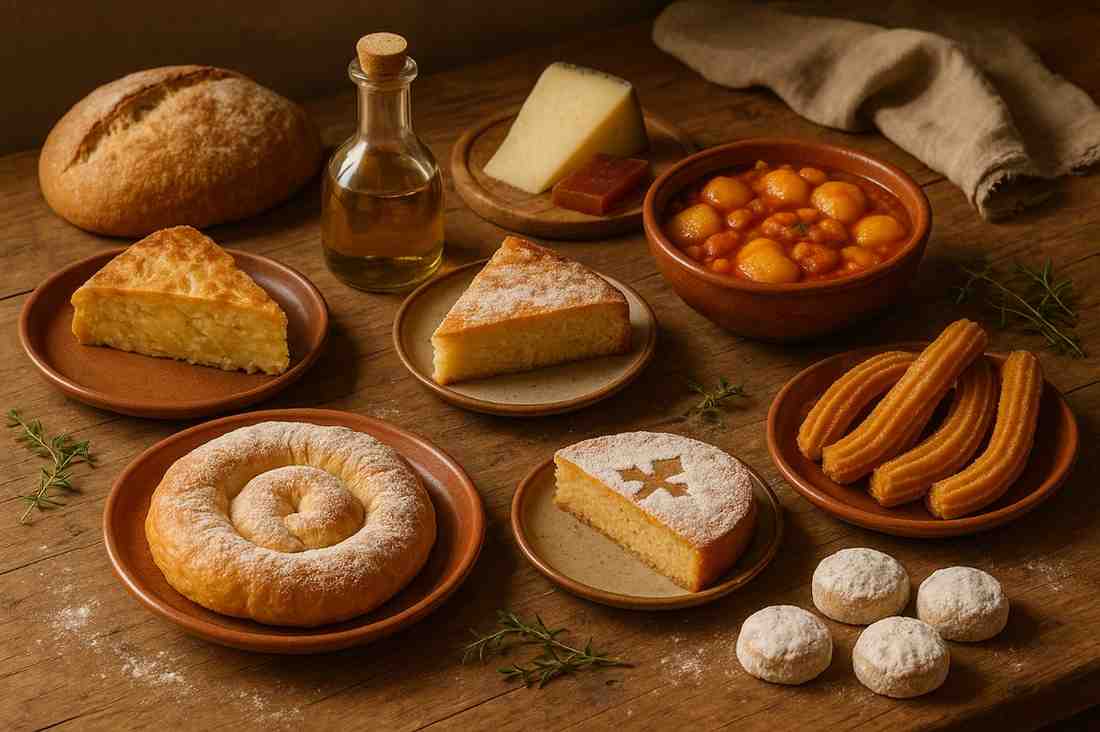
Spain’s culinary soul is not just sweet pastries or coastal paellas—it is also built on robust, earthy, deeply comforting dishes that sustain rural life, mountain communities, and winter traditions. Root vegetables, potatoes, legumes, and slow-cooked stews have long defined Spanish home cooking, offering nourishment through cold seasons and agricultural rhythms. Many of these dishes remain regional treasures rarely found outside small villages, yet they represent some of Spain’s most heartfelt cooking.
Patatas at the Heart of Spanish Cuisine
Potatoes (patatas) arrived in Spain in the 16th century through trade routes from the Andes, and they became a foundational food source. Today, Spain produces some of Europe’s best potato varieties, and nearly every region boasts signature potato dishes.
Tortilla de Patatas
The iconic Spanish potato omelette is arguably the most beloved national comfort food. Made from humble ingredients—potatoes, eggs, olive oil, and sometimes onion—it exists in passionate variations: runny vs. firm, with or without onion, thick or thin. Eaten warm or cold, served in tapas bars or family kitchens, tortilla de patatas represents simple perfection.
Patatas a la Riojana
A rustic stew from La Rioja combining potatoes, smoky paprika, and chorizo. The potatoes are cut in a way that they break slightly while cooking, releasing starch that thickens the broth into velvety richness.
Root-Vegetable Traditions
Spain’s climate and geography created a strong culture of roots and seasonal vegetables—turnips, parsnips, carrots, cabbage, beetroot, sweet potatoes, and Jerusalem artichokes appear in many traditional dishes.
Caldo Gallego
A warming broth from Galicia featuring turnip greens (grelos), potatoes, chorizo, and white beans. It is a winter staple with deep Celtic roots, symbolizing northern Spain’s pastoral traditions.
Cocido Madrileño
A legendary chickpea-based stew layered with meats, potatoes, carrots, and cabbage. Traditionally eaten in three courses, this is the epitome of Sunday family lunches in Madrid—slow cooking and communal eating.
Sopa de Ajo (Garlic Soup)
A Castilian classic made with stale bread, paprika, garlic, and sometimes a poached egg. Once a dish for shepherds and farmers, today it is considered a comforting cure-all.
Mountain-Style & Country Comforts
Spain’s rural interior has a proud tradition of hearty meals designed for energy and resilience.
Pote Asturiano
A robust, smoky stew with cabbage, potatoes, beans, and assorted pork cuts, deeply tied to Asturias’ rainy climate and rugged mountain landscape.
Patatas Revolconas (Castilla y León)
Mashed potatoes dyed orange with smoked paprika and topped with crispy pork cracklings—simple, intense, and unforgettable.
Trinxat (Catalonia)
A winter dish made with mashed potatoes, cabbage, and garlic, pan-fried into a rustic cake. Traditionally eaten after pig-slaughter festivals, it embodies ancestral celebration cuisine.
How Comfort Food Connects to Spanish Identity
These dishes highlight a cultural philosophy: food is memory, community, and survival. Many originated in times of scarcity, relying on inexpensive ingredients transformed with love and ingenuity. Today, they carry nostalgia for home, grandparents’ kitchens, and village gatherings around the fire.
From delicate almond pastries to slow-cooked stews, Spanish cuisine reminds us that joy lives equally in festive sweets and humble bowls of potatoes.