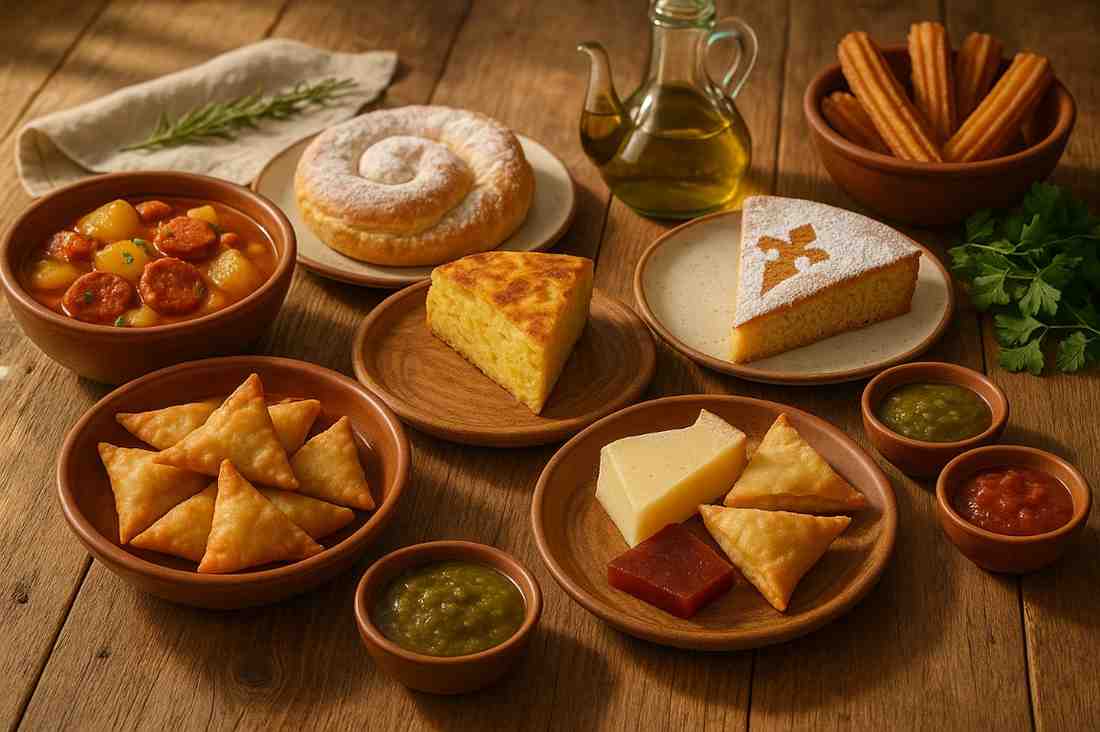
Though not Spanish in origin, the samosa has earned a beloved place in global comfort food culture—recognized for its crisp pastry shell, warm spiced filling, and satisfying balance of textures. Its journey spans continents, evolving through history, migration, and local adaptation. Today, samosas are enjoyed everywhere from South Asian street stalls to gourmet fusion restaurants, a testament to their universal appeal.
A Brief History
The samosa traces its roots back to ancient Persian and Central Asian cuisines, where it was known as “sanbosag”, a small savory pastry filled with meats, nuts, and spices. Traders carried it along the Silk Road into the Indian subcontinent, where it evolved into the triangular, potato-filled version beloved today.
The Portuguese and Spanish culinary exchange with India during the Age of Exploration introduced new ingredients like chilies and potatoes—both of which now define modern samosa filling. In this way, the samosa is also tied indirectly to the same historical currents that shaped Spanish comfort food.
The Anatomy of the Perfect Samosa
Samosas vary widely across regions, but most share three essential components:
1. The Pastry
Traditionally made with flour, salt, water, and oil, rolled into thin sheets, then folded into cone shapes. The ideal shell is crispy and blistered after deep-frying, though baked versions are increasingly common.
2. The Filling
The most popular version consists of:
- Potatoes
- Green peas
- Onions
- Ginger, garlic
- Spices such as garam masala, cumin, coriander, turmeric, chili
- Fresh herbs like cilantro
In many places, samosas feature regional specialties such as spiced lamb, chicken, lentils, or vegetables like sweet potato and beetroot—showing striking parallels to Spain’s regional variations in comfort cooking.
3. The Accompaniments
Samosas are typically served with tangy and sweet-and-spicy chutneys:
- Tamarind-date chutney
- Mint-cilantro chutney
- Spicy yogurt sauces
These contrasts elevate the samosa experience beyond a simple fried snack.
The Samosa as Global Comfort Food
The samosa’s appeal lies not just in taste, but in its emotional warmth. It is:
- A festival food
- A street snack
- A tea-time companion
- A symbol of hospitality
Like the Spanish tortilla de patatas, it is humble, adaptable, and rooted in family traditions. In many cultures, making samosas is a communal ritual, where people gather to fill and fold hundreds of pastries in preparation for celebrations.
Samosa Variations Around the World
| Region | Variation | Notable Feature |
|---|---|---|
| India & Pakistan | Vegetable or meat samosa | Deep spices, signature triangular fold |
| East Africa (Kenya/Tanzania) | Meat samosa | Thin crisp wrapper, street food staple |
| Middle East | Sambousek | Crescent-shaped, often filled with cheese or meat |
| Portugal & Goa | Chamucas | Spicy fillings influenced by colonial fusion |
| UK & US | Fusion samosas | Sweet fillings, cheese blends, baked options |
A Bridge Between Cultures
Just as Spanish pastries and stews carry centuries of cultural exchange, the samosa reflects how food travels, adapts, and becomes part of new identities. It stands as a celebration of spice, warmth, and shared heritage across continents.