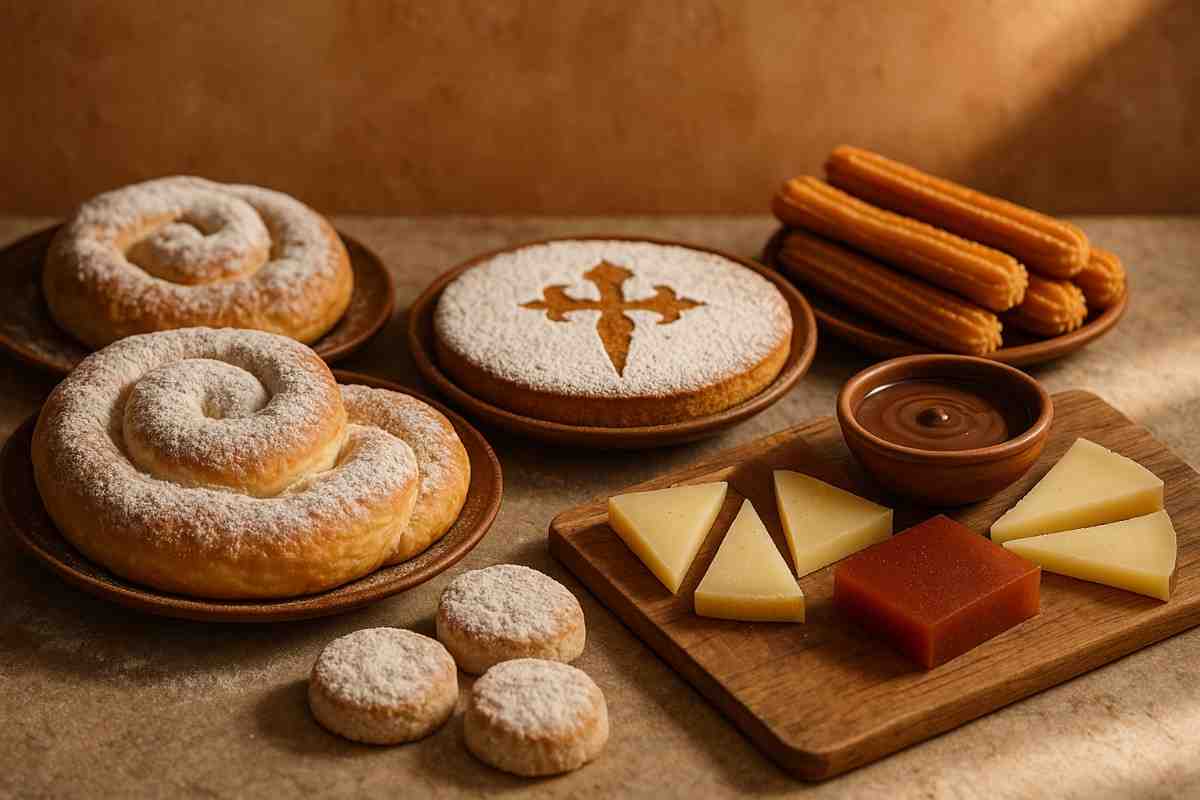
Spanish baking is rooted in a blend of Mediterranean simplicity and Arab-Andalusian sophistication. Ingredients like almonds, sesame, cinnamon, orange blossom water, and honey appear frequently, reflecting the legacy of over 700 years of Moorish presence. Unlike heavy butter-rich pastries of Northern Europe, many Spanish treats rely instead on olive oil, creating lighter and deeply aromatic pastries.
Bakeries or panaderías and pastry shops pastelerías remain social institutions in Spanish neighborhoods. Morning coffee is incomplete without freshly baked napolitanas—thin, buttery pastries filled with chocolate or cream—or the traditional ensaimada, a spiral sweet bread from Mallorca dusted simply with powdered sugar.
Must-Try Traditional Pastries
Ensaimada Mallorquina
Originating in Mallorca and dating back to the 17th century, the Ensaimada consists of coiled, airy dough made with lard (saïm) that gives it a unique texture. Today it comes in both plain and luxurious filled versions—like cabello de ángel (caramelized pumpkin threads), cream, and chocolate.
Tarta de Santiago
A signature dessert from Galicia, this almond cake stamped with the Cross of Saint James is fragrant, moist, and entirely flourless—making it naturally gluten-free. Flavored lightly with lemon and cinnamon, it carries a religious legacy tied to the Camino de Santiago pilgrimage route.
Roscón de Reyes
A brioche-like crown decorated with candied fruits and eaten on January 6th, Epiphany Day. Traditionally, a small figurine and bean are hidden inside—whoever finds the figurine is king for the day; whoever finds the bean must pay for the next Roscón!
Piononos
From Granada, these small rolled sponge cakes soaked in syrup and crowned with toasted cream offer a melt-in-the-mouth experience. Their origin is linked to Pope Pius IX (Pío Nono), giving them a quirky historical twist.
Polvorones & Mantecados
Crumbly, sandy-textured holiday sweets from Andalusia made with lard, flour, almonds, and sugar. The tradition of shaking the cookie in its wrapper to keep it from breaking before eating is as iconic as the dessert itself.
Underrated & Lesser-Known Desserts
Fardelejos (La Rioja)
Crispy pastry filled with almond paste, originally created by Arab confectioners. A hidden gem rarely found outside its region.
Quesada Pasiega (Cantabria)
A cheesecake-like dessert made not with cream cheese, but with fresh cow’s milk curds, butter, flour, and lemon zest, giving it a light pudding-like texture. This rustic dish tastes like the northern countryside.
Leche Frita
Literally “fried milk,” a silky custard block dusted with cinnamon and served warm and crispy. A perfect example of Spain’s resourceful home-cooking tradition.
Bartolillos Madrileños
Delicate deep-fried pastries filled with pastry cream, dusted with icing sugar, often enjoyed during festival seasons in Madrid.
Spain’s Hidden World of Dessert Cheeses
Spain boasts over 150 officially recognized cheeses, many playing starring roles in desserts or sweet pairings.
| Cheese | Region | Dessert Role | Notes |
|---|---|---|---|
| Torta del Casar | Extremadura | Served warm with honey | Creamy, spoonable sheep’s cheese |
| Mató | Catalonia | With honey & nuts (mel i mató) | Light and subtly sweet |
| Idiazábal | Basque Country | With quince paste (membrillo) | Smoky and firm sheep’s cheese |
| Tetilla | Galicia | Used in pastries & custards | Melts beautifully |
| Cabrales | Asturias | Dessert pairing with chestnut honey | Strong mountain blue cheese |
Membrillo & Cheese: A National Sweet Tradition
One of Spain’s simplest yet unforgettable desserts is queso con membrillo—a slice of manchego cheese layered with quince paste. Salty, sweet, and deeply satisfying, this pairing sums up Spain’s belief in balance and elegance without complication.
Baking in Spain Today: A Revival of Heritage
From artisan bakeries reviving ancestral sourdoughs to convents selling secret-recipe pastries through tiny revolving doors, Spain is currently experiencing a renaissance in handcrafted desserts. Young chefs are rediscovering traditional ingredients, flavors, and regional stories, elevating old recipes into contemporary gastronomy while honoring their past.
Whether you stumble upon a small family-run bakery in a whitewashed Andalusian village or a modern pastry bar in Barcelona, Spanish desserts offer something far richer than sweetness—they are edible history.
Conclusion
Spanish baking, pastries, and dessert cheeses are deeply tied to identity and celebration. They remind us that culinary culture is not just about taste, but memory, heritage, and community. Exploring them is a journey through the heart of Spain—one delicious bite at a time.